
Ann Arbor (Informed Comment) – I looked back through our Informed Comment archives for what I thought were the most significant green energy good news stories we covered in 2025, and here are the 3 that I came up with.
1. Have we Reached Peak Fossil Fuels? Wind & Solar met all New Energy Demand in Q1-Q3 ’25
Richard Black and other analysts at the Ember energy consultancy find that all new electricity demand in the first three quarters of 2025 was met by solar and wind, mainly solar. That statistic requires us to conclude that there was no growth in fossil fuels globally during that period. Ember anticipates that Q4 will show the same result . . .
Ember finds that solar power-generating capacity grew Q1-Q3 ’25 by an unprecedented 31% over the same three quarters in 2024. In absolute terms, it grew by a whopping 498 Terawatt hours. Solar has never before in history grown that fast and that much. Solar panels around the world made more electricity in the first three quarters of this year than they did in all of 2024 . . .
Just a few days left to help us meet our fundraising goal!

Or by check:
Juan Cole
P. O. Box 4218,
Ann Arbor, MI 48104-2548
USA
(Remember, make the checks out to “Juan Cole” or they can’t be cashed)
Wind power generating capacity also grew this year by 7.6% over the same three quarters in 2024, or 137 Terawatt hours. That is, wind grew three times more than the economy as a whole did.
In the first three quarters of 2025, electricity demand grew worldwide by 603 terawatt hours, some 2.7%.
Since total wind and solar growth equaled 603 Terawatt hours Q1-Q3 of this year, solar and wind met all of it with a little left over to spare.
There was no demand for new fossil fuel power generation. None. Nada. Zilch. Rien. Nichts.
—
2. 25% of New Cars purchased Globally in 2025 were EVs, and in China it was nearly 50%.
Euan Gregor at the Ember energy think tank makes a novel argument: The adoption of electric vehicles has spread in a major way to the Global South and is no longer only a Chinese, European and American phenomenon. By EVs Ember means both hybrid and pure battery electric cars.
But it certainly is a Chinese phenomenon, since in that country nearly half of new car sales were electric this year. That is an incredible statistic.
Globally, Yale Climate Connections says, 25% of new car sales were electric of some sort. Road transportation, this site says, accounts for 12% of global carbon emissions.
Never miss an issue of Informed Comment: Click here to subscribe to our email newsletter! Social media will pretend to let you subscribe but then use algorithms to suppress the postings and show you their ads instead. And please, if you see an essay you like, paste it into an email and share with friends.
——
3. The World’s Nations in the past 10 years have reduced our likely trajectory from 3.5º C. (6.3º F.) in increased global heating over preindustrial norms by 2100 down to 2.8º C. (5º F.), and possibly even 2.3º C. (4.1º F.) if countries met their Nationally Determined Contributions.
One of Bill Gates’s half-truths is that there is good news about our climate progress and so no grounds for doomsaying. It certainly is true that we now have the levers to limit climate damage. That, however, doesn’t change our need to jolt the world aggressively with those very levers. The United Nations has recently concluded that we are indeed on a path to limit (if, under the circumstances, that’s even an adequate word for it) global heating to 2.8 degrees Celsius over the preindustrial average, if the countries of the world were to continue with their current policies, which reflect, however modestly, the global consensus that grew out of the 2015 Paris Agreement on climate change. Before that milestone, the world was marching toward an increase of 3.5º Celsius or more in the average surface temperature of the globe by 2100. The reduction in that projection, achieved over a decade, certainly represents genuine progress and should be celebrated, but the one thing it should not be used for (as Gates indeed does) is as an excuse for now slacking off.
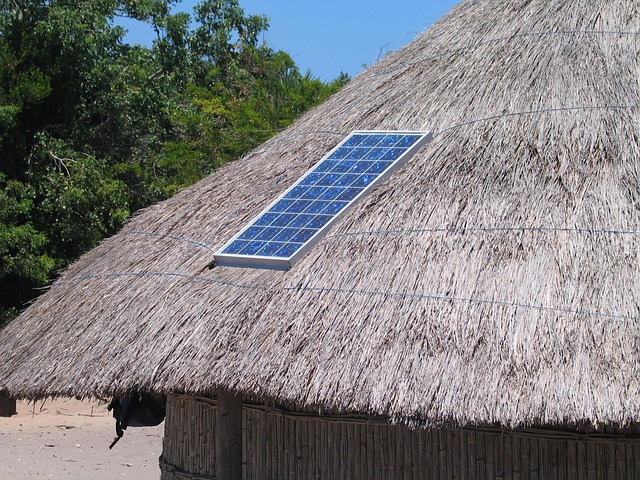
Image by teresa cotrim from Pixabay
The world’s peoples could shave another significant half a degree off that number if they simply met their Paris Agreement Nationally Determined Contributions, or NDCs. But even were they indeed to be faithful to their promises, we’re being taken inexorably toward at least a 2.3º Celsius global heat increase and, to put that in perspective, climate scientists worry that anything above 1.5º Celsius [2.3º F.] could ensure that the world’s climate will become devastatingly more chaotic. Imagine repeated Hurricane Melissas, far more turbocharged and striking not just islands in the Caribbean but, say, the U.S. Atlantic coast.


 © 2025 All Rights Reserved